
08 May How to get yourself back when you’ve let yourself go
May 8th, 2026
There’s a moment, and if you’re reading this, you’ll probably know exactly when it is, where something small gives you away. Not necessarily a medical diagnosis, not a dramatic wake-up call.
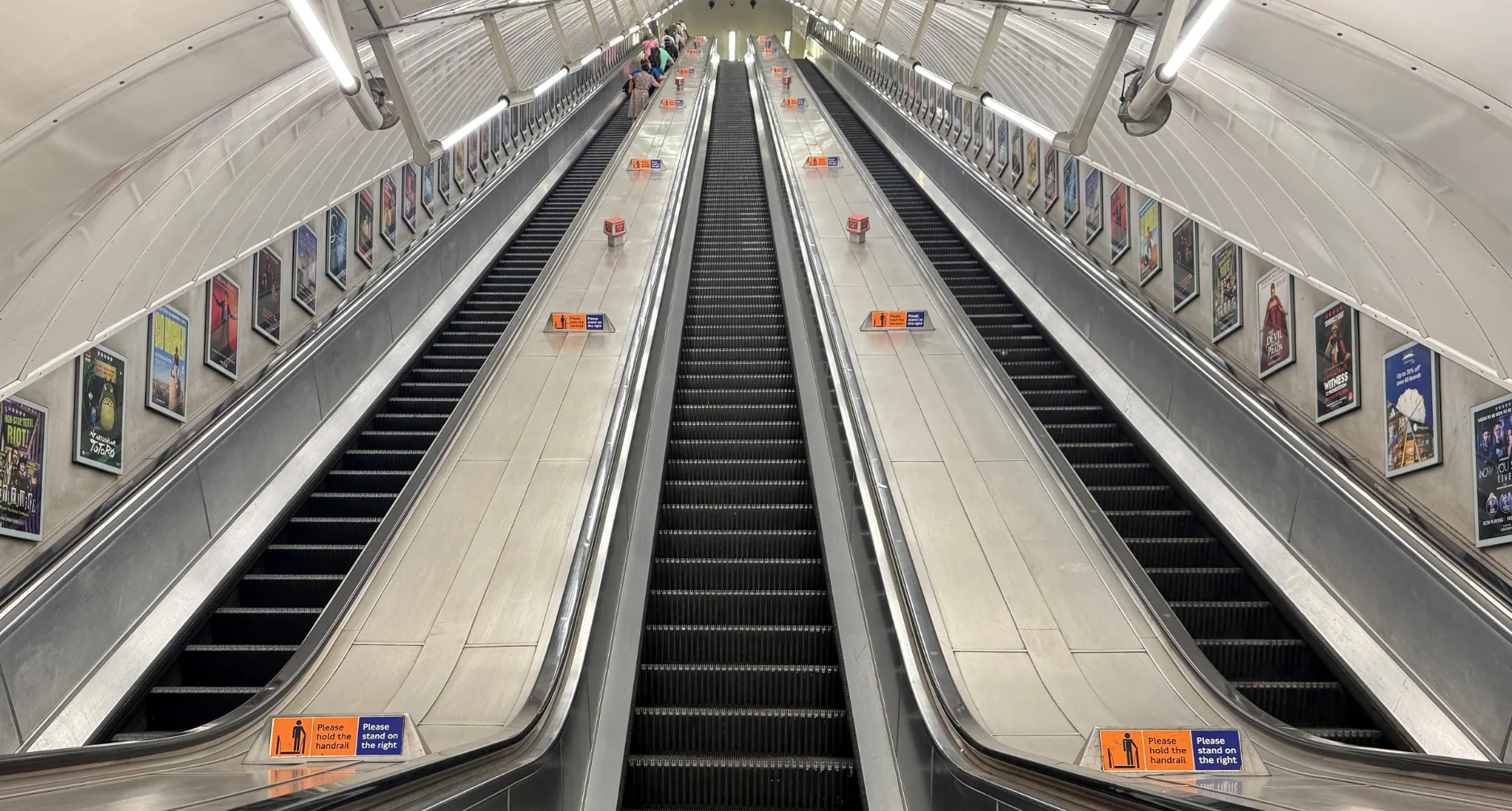
Just a Tuesday morning on the Underground, standing at the bottom of a long escalator, and doing the quiet calculation: walk or ride? And you ride. Not because you’ve go plenty of time. Because the thought of walking up it just seems like more than you want to take on right now.
You step on, you stand still, and somewhere in the back of your mind, something registers. You used to be able to walk up without even pausing for thought.
The thing that makes this particular kind of drift so difficult to confront is the gap it creates between your identity, and how you feel physically. Your mind is sharp. Your sense of humour hasn’t aged a day. You can hold your own in any room and you know exactly who you are. But your body has started sending different signals… the ones that make you feel like you’re operating inside something slightly out of warranty.
Young of mind, increasingly creaky of everything else. And the frustrating part is you can’t quite identify the specific moment it happened. It just did, incrementally, while you were busy looking after everyone, and everything else that mattered.
The other thing that holds a lot of people in place at this point is the prospect of exercise itself. For more people than you’d think, the version of exercise that springs to mind; the gym, the routine, the grind bores you to tears. And you know yourself well enough to know that boring things don’t stick.
You’ve started and stopped enough times to understand that willpower alone doesn’t beat monotony. So you do nothing, which you also know isn’t the answer.
Here’s what actually moves the needle.
Make nutrition easy; plan before the chaos arrives.
You already know your week is going to get away from you by Tuesday. Why not make a rough plan of your lunches and dinners on Sunday, before the overwhelm hits you? Five minutes of thinking ahead will make better decision-making automatic when you’re tired, hungry, and standing in front of the fridge at 8pm.
Build your day around protein.
Everything else can be flexible – for a dad in his 40’s, protein really cannot. Lean meat, eggs, Greek yoghurt, cottage cheese, seitan need to show up consistently, not occasionally. Get your protein right and it’s much easier to snack less, maintain your energy throughout the day and maintain your muscle mass as you age. All the other good stuff can be built upon this base.
Create a rotation, not a repertoire.
You don’t need variety, what’s needed is reliability. Five or six breakfasts that work, the same for lunches, ten dinners you can cook/create without thinking. Remove the daily decision. Decision fatigue really is a curse, and it’s where good intentions go to die.
Make exercise a fixture without making it a chore.
Find a version that doesn’t bore you, and start there.
This matters more than almost anything else. A home-routine that you always feel better afterwards, a sport you half-enjoy, a walk with a podcast you genuinely look forward to, a gym class where the hour goes quickly… these beat the ‘objectively superior’ workout that you quietly dread and eventually abandon. Consistency is the whole game. An exercise that bores you to tears has a ceiling because it has an expiry date.
Use the time you have, not the time you wish you had.
Three 30-minute sessions per week, done reliably, will change your body and your health over a year. Stop waiting for the hour you don’t have. The 30 minutes you do have is enough.
Start measuring yourself against things that matter.
Not the scales. Walk up the escalator next week. Just try. Then try it the week after. Track whether the thought of it feels different in a month. These small, functional improvements are the ones that will keep you motivated far longer than a number on a scale, because they connect directly to the quality of your actual daily life. I call these ‘small wins’… stack enough of these up and your physicality starts to claw its way back to your identity.
‘Getting yourself back after you’ve let yourself go’ isn’t about punishment or perfection. It’s simply a decision to stop treating your health as the thing that gets whatever’s left at the end of the day.
Your energy will come back. Your body will start feeling like yours again. These incremental ‘small wins’ will add up, until one Tuesday morning, without really thinking about it, you’ll find yourself walking up that escalator… and not even noticing that you did.
Click here for my masterclass showing how the Lean Dad Project can help you get back to where you should be, for the long-term.
Ayo Williams