12 Oct Protein after 40: how much do you actually need, and why should you care?
October 12th, 2026
Protein has somehow become both complicated and fashionable. One minute it’s in your cereal, the next it’s in your crisps, and last month I saw some joker on Instagram put scoops of powder in his coffee. Meanwhile you’re just trying to feed yourself and a family on a Monday.
At the end of every in-person presentation I give, no matter how much I cover things there is ALWAYS an additional question about protein in the Q&As at the end. Let me simplify things.
What protein actually does
Protein is the raw material your body uses to repair and maintain itself, muscle included. As I’ve covered before, we lose muscle gradually from our 30s onwards, so it’s worth giving your body what it needs to hold on to it.
Why it matters when you want to lose fat and get stronger
- It keeps you fuller. Protein is the most satiating nutrient, so you’re less likely to be tempted by sweet treats at 4pm.
- It protects muscle. When you eat less to lose fat, protein helps make sure what you lose is fat rather than muscle.
- It helps you build. If you’re strength training (and you really should be), protein gives your muscles something to work with.
- It helps you recover. Better bounce-back after a training session, impromptu kickabout, or a random day on your feet on weekend.
So how much?
The official minimum is fairly low, around 0.75g per kilo of bodyweight. But for men over 40 who are training and trying to lose fat, most coaches (including me) aim higher, in the region of 1.2g to 1.8g per kilo. For an 85kg dad, that’s roughly 105-155g a day.
Numbers aren’t for everyone or long-term adherence, so the easier way to think about it is to aim for a palm-sized portion of protein at every meal, and two palms at the main ones. For more straightforward advice on eating well around work and family life, visit my Nutrition for Dads guide.
Spread it out
Most of us eat a small amount of protein at breakfast, a bit more at lunch, and a mountain at dinner. Your body tends to do better when it’s spread across the day, with a decent hit at each meal rather than one big one in the evening. Think 30-40g per meal.
The classic weak point: your breakfast
Toast. Cereal. A croissant on the go. A coffee, and ‘I’ll eat properly later’. Breakfast is where protein quietly goes missing, and it’s usually the easiest fix.
What does it actually look like?
These numbers are of course approximate, because portions vary:
- Breakfast: four eggs (about 24g), or 200g of Greek yoghurt (roughly 20g) with fruit and a few nuts
- Lunch: a tin of tuna (about 25g) or a chicken breast (around 40g), with salad, wraps, or last night’s leftovers
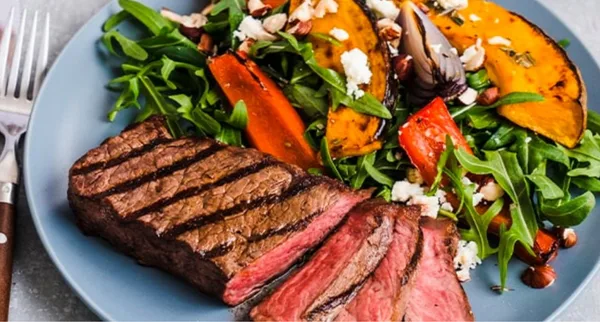
- Dinner: a salmon fillet (about 25-30g), lean mince, or a steak, with plenty of veg
- Snacks: cottage cheese, a boiled egg or two, or a handful of edamame
A day like this means that you’re well on the way to being in range without weighing anything.
Do you need protein shakes?
No. You don’t need them because real food does the job. But a shake is a convenient option when life gets in the way, as it sooo often does (a quick breakfast, post-gym, or the days you’ve missed lunch). One scoop gives you around 20-25g, and it’s no better or worse than the protein in a chicken breast. It’s simply faster. If you’re as busy as most of my clients, it is a good idea to have them handy as an option.
When it comes to protein, if you’re obsessing over numbers or how you can get more protein into your mince pie or coffee then you’ve missed the point. Start with this double-headed question at each meal:
“Where’s the protein; and is there enough?”
Answer that whenever you’re making a choice about what you eat… and the rest tends to look after itself.
Ayo Williams
If you’d like help building eating and training habits that work around your life, the Lean Dad Project provides personalised coaching, structure and accountability to make it happen.